Press "Enter" to skip to content

Tag: Blog

Peer sharing session about online community engagement

Original link

On November 23, I facilitated an HC Link peer-sharing webinar on online community engagement. I had the misfortune to lose my internet connection half a dozen times during the session, which is always exciting when one is facilitating — a huge thank-you to the participants for your patience! And to Andrea Bodkin, HC Link’s Coordinator, who stepped in as technical backup.

We left the definition of “online community engagement” open. Whether it’s a community that wants to engage online, or an online community that wants to increase engagement, a community is the people involved and not the technology, so it’s quite possible to talk about both at once.

We discussed creating a Terms of Reference for an online community — the difficulty of drafting such a thing before discussing it with potential community members, yet the need for management accountability. The need for flexibility in the document was raised, so that the group can grow and change over time and feel ownership of the community.

Next, people suggested ways to pique people’s interest in the community. Relevance was key here: connect people to content and expertise, help them with their work and goals. One participant was running a community that had recently added a feature that allowed users to tag others in discussions if their opinions or expertise would be helpful — at which point they are emailed a notification, and their response (or lack thereof) is, of course, visible, providing some mild peer pressure to participate.

Participants felt regular updates helped a community both feel and stay active. A monthly newsletter via email, with links back to the community highlighting what’s new / hot topics / upcoming events was one great idea, as were occasional face-to-face meetings (if possible).

Thinking about the technology itself, people generally suggested thinking first about what functions the community truly needs and where people are already. Can you start with a plain old email list? Or Facebook? Often, you can. It’s easier for people to engage if it doesn’t involve learning an entirely new tool.

The issue of moderation was raised. Moderation can be fantastically time-consuming and a source of contention, in my experience, so I suggested avoiding it if at all possible. Others pointed out that group culture, if developed carefully over time, often works well to counter or discourage inappropriate posts. Sometimes supporting people behind the scenes to post and model a desired behaviour — social support of a good post, or respectful criticism — can work well to get things going.

We finished by encouraging people to join HC Link’s discussion list, Community-Links (http://lists.hclinkontario.ca/listinfo.cgi/community-links-hclinkontario.ca), and to get in touch if they had questions that weren’t answered in the peer-sharing session.

Thanks to all the participants!

Here are some of the resources that were shared in the session:

Comments closed

Vision Zero: No more road deaths

Original link

What’s more important: letting cars move quickly, or keeping everyone (inside and outside cars) safe? Is risk of death or injury the price we have to pay for mobility? As health promoters, we see injury prevention (as well as pollution and healthy neighbourhoods) as a key component of healthy communities, and road safety as surely something worthy of serious design efforts that mitigate danger. The international Vision Zero movement agrees.

No loss of life is acceptable. In every situation a person might fail — the road system should not. This is the core principle of the Vision Zero concept.” — http://www.visionzeroinitiative.com/

In essence, Vision Zero works to design transportation systems that compensate for human error. Whatever mistake you might make as an imperfect and distractable human, the systems around you should protect you. It’s an approach that puts much more emphasis on design and much less on the behaviour of the system’s users. When health promoters talk about lifestyle issues we often say “make the healthy choice the easy choice” — it’s easy to see how Vision Zero is doing exactly that.

On November 29, HC Link Coordinator Andrea Bodkin and I are excited to be covering the Vision Zero Summit on social media. Organized by Parachute, the Summit will look at how Vision Zero is being implemented in Canada, drawing on examples from Canada and beyond. Watch for our tweets and blog posts!

As Edmonton, which was the first Canadian city to officially adopt Vision Zero, says:

“Why should you get behind Vision Zero?

We all want our loved ones to get home safely.”

HC Link’s blog series on Vision Zero

Vision Zero: No more road deaths

Why I’m SO Excited about Vision Zero

Vision Zero’s approach to infrastructure: Making mobility safe from the start

More information:

Vision Zero (Sweden)

Vision Zero Canada

Parachute Canada – Vision Zero

Canada’s Vision Zero Summit

Summit hashtag: #VZSummit

Comments closed

October 15 is Pregnancy and Infant Loss Day

Original link

Ontario declared October 15 as Pregnancy and Infant Loss Day very late in 2015, so tomorrow will be the first time this day of remembrance has taken place.

Losing a pregnancy or an infant is a peculiarly difficult form of loss — invisible as all losses are invisible to those outside them, but also with the additional loss of a lifetime of possibility and the very physical sequelae unavoidable at the end of a pregnancy. It’s a monstrous, momentous, unexpected loss, but not a form of loss that we talk about often, although it’s far from uncommon. Perhaps this day of remembrance will help bring the conversation about this form of loss further into the vernacular.

I recently read An Exact Replica of a Figment of My Imagination, Elizabeth McCracken‘s memoir of her stillborn son. She writes about her grief with perceptiveness and clarity and even humour:

“Perhaps it goes without saying that I believe in the geographic cure. Of course you can’t out-travel sadness. You will find it has smuggled itself along in your suitcase. It coats the camera lens, it flavors the local cuisine. In that different sunlight, it stands out, awkward, yours, honking in the brash vowels of your native tongue in otherwise quiet restaurants. You may even feel proud of its stubbornness as it follows you up the bell towers and monuments, as it pants in your ear while you take in the view. I travel not to get away from my troubles but to see how they look in front of famous buildings or on deserted beaches. I take them for walks. Sometimes I get them drunk. Back at home we generally understand each other better.”

It must have been a cathartic book to write, as it certainly is to read.

If you’ve experienced such a loss — as some of us here at Health Nexus have — our hearts are with you, on October 15 and every day.

In Ontario, the Pregnancy and Infant Loss Network (PAIL) offers support groups for bereaved families in many locations, as well as butterfly releases in two cities. See their website for details.

Comments closed

Healthy Kids Community Challenge: “Water Does Wonders”

Original link

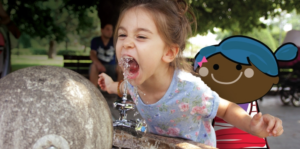
As a member of the Healthy Kids Resource Centre, HC Link is proud to support the Healthy Kids Community Challenge program. This program promotes children’s health by focusing on a healthy start in life, healthy food, and healthy active communities. After nearly a year on the first theme of the program “Run. Jump. Play. Every Day.”, in July the 45 participating communities launched into the second theme, “Water Does Wonders”.

Water Does Wonders
Source: http://healthykidsniagara.ca/water-does-wonders

The principal message of this theme is to encourage kids to drink water instead of sugar-sweetened beverages when they are thirsty. Sugar-sweetened beverages are completely unnecessary as part of a healthy diet. The Heart and Stroke Foundation says:

“Consuming too much sugar is associated with heart disease, stroke, obesity, diabetes, high blood cholesterol, cancer and cavities.”

How can we encourage children (and their families) to drink more water, and to drink water instead of sugary drinks? The 45 participating communities have lots of ideas.

A popular idea is distributing reusable water bottles to kids. A number of communities encouraged families to photograph themselves with their reusable water bottles while engaging in various physical activities, and to share their photos on social media.

When one has a reusable water bottle, it’s important to be able to refill it. To fill this need, various communities are installing refill stations.

As another idea to illustrate “Water Does Wonders” for health, in the summer various communities sponsored free swims – water in enormous quantity!

For other participating communities, clean, drinkable, safe water is not easily available. In these communities, participants are working to improve access to clean water as a necessary co-requisite to encouraging children to drink more water.

Follow the participating communities on Twitter in English #HealthyKidsON and #IChooseTapWater and in French #enfantsensanteON.

Comments closed

Social Innovation: It’s about Systems Change

Original link

On September 26 I went to a Social Impact Generation session at the Centre for Social Innovation (CSI) on “The culture, passion and how for social innovation”.

I couldn’t immediately remember why I had thought it so important to attend, but it became quickly apparent: several of the guests were from Australia and would talk about TACSI, the innovation lab there, and another guest had been involved in the Kafka Brigade which I’ve always enjoyed.

We hear the word “innovation” a lot in health promotion, often applied somewhat haphazardly, but I was pleased to hear that TACSI’s innovation focus was on system change. They believe all people should have the opportunity to have a good life and to have a say in what that looks like. Health promoters will recognize a close echo of the WHO definition of health promotion in that statement, altough TACSI doesn’t call themselves health promoters.

They see system change developing through four channels:

  1. Understand the problems and opportunities people experience and built empathy for people and systems. Unpack the assumptions.
  2. Consider how you design for that truth. What approaches, methods and tools might you use?
  3. Take a capability-building, mutual-learning approach.
  4. When the first three aren’t enough, accept that you’re working on a profound systemic challenge. This is the most intangible level, and you’ll need to experiment to shift systems so people can live good lives.

Several points struck me as interesting for health promoters to consider:

  • The use of the word “capability” where we would typically use the word “capacity”. I think we may wish to consider using “capability” more often — it’s more easily understood and sounds more active.
  • One presenter emphasized that while we are often good at collaborating with people with like minds, to really change systems we need to learn “conflictual collaboration” — that is, to collaborate across difference and disagreement, and to be more comfortable not liking each other.
  • All presenters agreed that lots of failures are part of the process in systems change. Innovation labs can be useful, not only as places to encourage ideas and experiments but also as places where people can learn from the failures of others instead of repeating them.
  • They noted that idea generation is not an end in itself and doesn’t change the world. You have to act, even knowing that most of your experiments won’t succeed with any rigour. So connect and act!

A video of the evening is now posted.

Comments closed

Action communautaire Enfants en santé : « L’eau fait des merveilles »

En tant que membre des centres de ressources Enfants en santé, Réseau CS est fier d’appuyer le programme Action communautaire Enfants en santé. Ce programme favorise la santé des enfants en promouvant l’alimentation saine, l’activité physique, et les comportements sains. Après presqu’un an sur le premier thème « Courir. Sauter. Jouer. Tous les jours », les 45 collectivités participantes ont commencé en juillet le deuxième thème du programme « L’eau fait des merveilles ».
Le message principal de ce thème est de remplacer les boissons sucrées par l’eau quand on a soif. Les boissons sucrées ne sont pas du tout nécessaires pour une alimentation saine. Selon la Fondation des maladies du cœur et de l’AVC :
« Une consommation excessive de sucre est associée aux maladies du cœur, à l’AVC, à l’obésité, au diabète, à l’hypercholestérolémie, au cancer et aux caries dentaires. »
Comment encourager les enfants (et leurs familles) à boire plus d’eau, et de boire de l’eau au lieu de boissons sucrées? Les 45 collectivités participantes ont quelques idées.
Une des idées populaires est de distribuer aux enfants des bouteilles d’eau réutilisables. Certaines communautés incitent les familles à se photographier avec leurs bouteilles d’eau réutilisable lorsqu’elles font de l’activité physique, et de partager ces photos sur les médias sociaux.
Quand on utilise une bouteille d’eau réutilisable, c’est important de pouvoir la remplir à nouveau. À cause de cette nécessité, quelques collectivités participantes installent des stations d’eau.
Une autre idée pour illustrer que « L’eau fait des merveilles » pour la santé, quelques communautés ont parrainé des occasions pour faire de la natation sans frais l’été passé — d’eau en très grande quantité !
Pour d’autres communautés, de l’eau propre, potable et sûre n’est pas facilement disponible. Dans ces communautés, les collectivités participantes feront des efforts pour améliorer l’accès à l’eau potable et encourageront les enfants à boire moins de boissons sucrées.
Suivez les collectivités participantes sur Twitter en français à #EnfantsEnSantéON et en anglais à #HealthyKidsON.
Comments closed

A few words in favour of Pokémon Go

Original link

Pokémon Go

As health promoters, we frequently can be heard disparaging video games. All that screen time! Why don’t people go outside? Well, Pokémon Go is getting people outside — albeit with screens still firmly in hands. What can we do to emphasize the health-promoting aspects of the game? Here are a few ideas.

Encourage inter-generational activity

Kids, parents, and grandparents can all play. Age gives no advantage, so it’s a fair game for all. Parents may find kids who play Pokémon Go are more willing to walk around their neighbourhoods, to take on chores such as dog-walking, and to tag along on dull errands such as grocery shopping, as they have to walk several kilometres to hatch Pokémon eggs. Time to encourage family Pokémon-hunting walks after dinner, perhaps?

Encourage exploration

Different Pokémon are found in different kinds of environments, so those found near water are different than those found on busy streets or near forests. Pokémon collectors need to venture beyond their usual haunts if they want to complete their collection. Health promoters can encourage people to use this opportunity to find and appreciate new features of their community. I’d like to see community walking tours that encompass local spots of interest both real and Pokémon-related.

Encourage the social elements

You can’t trade Pokémon (yet), but if you want to learn some of the finer points of playing or if you want to know where you can catch a particular kind of Pokémon, you’re going to need to go out and walk around, and you’re also going to have to talk to other players. It’s too soon for proper research, but anecdotal evidence suggests some people with autism or depression have been deriving benefits from walking and from Pokémon-related socializing. (You can go to spots called “gyms” to battle other players’ Pokémon as well, which might be considered another social element of the game, but that part is less potentially health-promoting!)

It’s easy for health promoters to disparage screens and video games, and sometimes we do so out of habit. I’d suggest we take a closer look at the assets Pokémon Go gives us to work with and see where it takes us.

Besides, it’s kind of fun.

Comments closed

Est-ce que le Pokémon Go est bien pour la santé ?

Original link

Le Pokémon Go est un jeu intéressant sur écran comme bien d’autres jeux. Ce qui est différent avec Pokémon Go c’est que les joueurs sortent de leurs maisons, qu’ils marchent et qu’ils parlent aux autres joueurs.

Les avantages

  • Il n’y a pas que les enfants qui jouent au Pokémon Go. Il y a également leurs parents, leurs grands-parents et aussi les jeunes adultes qui se souviennent des cartes Pokémon à collectionner des années 1990.  C’est rare qu’un jeu plaise à tant de gens de divers âges.
  • On doit marcher quelques kilomètres pour réussir à faire « éclore » les œufs de quelques Pokémons. La distance qu’on doit marcher peut atteindre jusqu’à 10 km.
  • On doit sortir de sa maison et explorer son quartier pour ramasser les Pokémons et on doit jouer avec d’autres participants pour gagner des batailles et avancer dans le jeu.

Les désavantages

  • Pour jouer, on doit marcher et regarder en même temps son écran. Les promoteurs de la santé préféreraient qu’on marche sans regarder l’écran pour éviter de se blesser et pour être conscient de son environnement.
  • Puisque le but du jeu est les batailles entre les Pokémons, certaines personnes préféreraient peut-être un but plus paisible, comme chasser les Pokémons sans les batailles.

Qu’est-ce que on doit en penser? Moi, je pense qu’il y a plus d’avantages que de désavantages. Les jeux qui utilisent la réalité amplifiée sont nouveaux et les activités qu’ils offrent intéressent énormément les promoteurs de la santé. Je suis curieuse de voir comment le jeu va se développer !

Comments closed

Webinar recap: new technology trends, tools, and applications

Original link

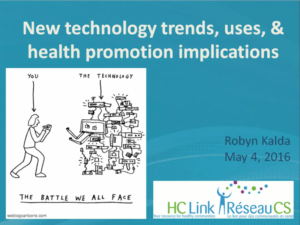
New Technology webinarStar Wars Day (May the 4th Be With You), seemed like a good day for a webinar on new technology trends and uses and some health promotion implications. As health promoters, we like to be sure we stay on the light side of the Force, and to do that we need to think about new technology as it develops as well as paying attention to research findings about the best ways existing technologies are used.
I discussed trends in new technology generally, including the Internet of Things, wearable technology, virtual reality / augmented reality, and the growth of the Internet as a shrinking collection of walled gardens.

Design trends I mentioned included the massive growth in mobile traffic, leading to trends such as responsive design (where the various parts of the page display differently depending on the size of your screen) and infinite scrolling (endless webpages that keep loading content, such as your Facebook homepage); the tendency for design to now be slightly less “flat” than has been the trend for the past few years; the increased use and acceptability of images and video; and the inclusion of nonstandard interface controls such as sideways scrolling (instead of the usual vertical scrolling).

I encouraged health promoters not to ignore the world of apps, which suffers from the same content-quality controls as the rest of the Internet. Whether we choose to create our own apps or whether we choose to help highlight the pros and cons of various existing apps, health promoters can play a useful role.

While research on social media has challenges — by the time you conduct and publish your research, the technology has probably changed — I discussed some findings from existing studies and reviews.

One main finding is that two-way communication in any kind of health promotion social media effort is critical for success. Just putting information out there is not enough.

Another main finding is that while many studies have assessed the reach of social media — and of course it can be very good at expanding an intervention’s reach — many fewer have assessed behaviour change. However, one meta-review did find no negative behaviour changes occurred as a result of social media interventions, so at the very least we can be reasonably sure we are not causing harm.

HC Link has a number of resources on social media including policy and plan outlines, a starter sheet to fill out before you set up a social media account, and a communications inventory to help you figure out what you already have that you might effectively repurpose with social media.

You can view the webinar recording and download the accompanying handout on our webinar archive page.

Comments closed

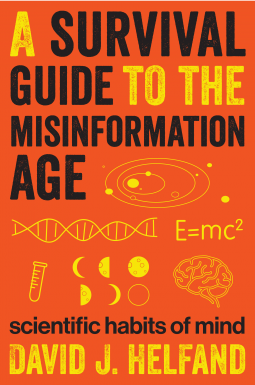
Book Review – A Survival Guide to the Misinformation Age: Scientific Habits of Mind, by David J. Helfand

Original link

“This world faces daunting challenges–from energy supplies to food supplies, from biodiversity collapse to the freshwater crisis, and, at the root of many of these issues, global climate change. Yet we shrink from confronting these challenges because we don’t like numbers and are more comfortable with beliefs than with rational thought” (loc 46)

Evidence, and being evidence-based, is a major theme in health promotion work right now. Of course evidence is a good thing, but what counts as evidence from a scientific perspective, and what skills do we need in order to evaluate whether it’s good evidence or not?

David J. Helfand’s book (published February 2016) is a good overview of the basics of scientific thinking. Helfand clearly loves science and his writing conveys the wonder and excitement of a scientific perspective.

“Adopting these habits of mind opens up worlds both unseen and unseeable to understanding. It allows us to read the history of the deep past and to predict the future. It provides us with context: our “pale blue dot is but one of eight planets and a few dozen moons orbiting one of a hundred billion stars (many of which, we now know, also have planets) that make up the Milky Way, one of a hundred billion galaxies in our visible corner of the universe. That, far more than a “rainbow in heaven,” is awe-full — it inspires awe.”(loc 232)

Helfand uses relatable examples to illustrate the habits of mind he describes: how much does a rainstorm slow down a baseball? If the US national debt is $1.7 trillion, how much is that per person? Based on a coin-toss rule, who should pay for lunch? The last chapter neatly pulls all the ideas and habits together, working through the example of climate change.

His tone tends toward the curmudgeonly, which I enjoyed tremendously:

“US consumers spent over $3 billion on homeopathic medicine in 2007, obtaining distilled water from which the last trace of such invaluable ingredients as crushed whole bees, red onions, and white arsenic were originally dissolved (a terrible waste of bees in my view).” (loc 3068)

I do worry that he may have pitched the book slightly higher than its ideal audience — those who, as per my first quote, don’t like numbers — might require. But if you made it through high school algebra (whether you remember any of it or not) and understand the basics of how graphs work, the math here shouldn’t be too frightening. There are formulas, but if you’re comfortable enough with the concepts Helfand is discussing, parsing the exact details of each calculation isn’t necessary to follow his argument. It’s the habits of mind and general approaches he discusses that are important, not the calculations in his examples. I’m sure he’d agree, given that one of those habits is “back of the envelope” estimation.

It is, of course, fully referenced and includes appendices with tips and practice questions for each chapter.

Recommended for anyone who’d like to stretch their science muscles or who frowns when someone mistakes “less” for “fewer”.

Comments closed