Press "Enter" to skip to content

Category: HC Link

March 2 Health in All Policies Forum

Original link

On March 2, over 30 people from around Ontario met at the lovely Ontario Heritage Trust building in downtown Toronto to talk about Health in All Policies.

Karen Loney from Chatham-Kent Public Health Unit was our MC for the day, moving the group through introductory presentations by Andrea Bodkin (HC Link Coordinator), who talked about the HC Link Policy Learning Community, and Kim Bergeron (Public Health Ontario), who gave an introduction to the Health in all Policies concept.

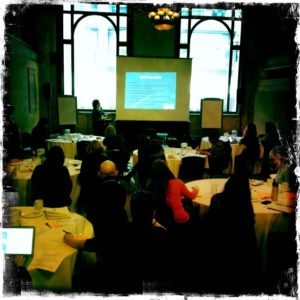
March 2 Policy Forum (Photo: Robyn Kalda)Presentations on specific Health in All Policies work followed. Tanya Hill from Hastings & Prince Edward Counties Health Unit, Karen Loney, Andrea Bodkin gave examples of work from different areas and discussed the challenges inherent in developing policies that affect health but that are outside the traditional bounds of what people think of as “health” — urban planning, for example.

Small-group and then large-group discussions gave participants a chance to discuss how they are using, or could use, Health in All Policies in their work.

As always, there were discussions about language. Are there better words to use than “health”? Does “wellness” perhaps make it clearer that we’re talking beyond the health-care system? Is using “citizen” exclusionary in policy development work? While it can be a strong reminder to politicians about where their support is found, the group suggested “residents” or just plain “people” as more inclusive options.

In the afternoon Kim Bergeron, Lorna McCue (Ontario Healthy Communities Coalition/HC Link), and michael kerr (Colour of Poverty – Colour of Change) presented tools and resources they found helpful.

The last session was a short focus group session on the HC Link Policy Learning Community now and in future.

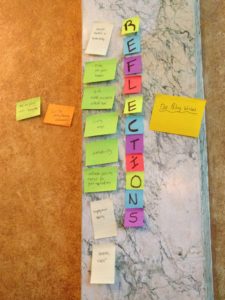
To end the day, attendees each offered a one-word summary of their thoughts. A few of these reflective words:

  • engagement
  • collaboration
  • rural
  • complexity
  • language
  • multi-sectoral collaboration
  • reframing
  • opportunities
  • challenges

The slides and other resources have now been posted on the HC Link Policy Learning Community discussion group – see here Additional resources are posted as replies to the initial “Health in All Policies Forum Resources” discussion forum, so keep scrolling down to see everything.

Thanks to all attendees for their insight and enthusiasm!

You will need to be a member of the HC Link Policy Learning Community to add comments or contribute your own links and resources.

Join the HC Link Policy Learning Community

March 2 Policy Forum (Photo: Robyn Kalda)


Comments closed

Questions people are asking about social media

Original link

Social media has been a popular topic for HC Link webinars, consultations and workshops this year in both English and French and we’re seeing some interesting trends.

There are starting to be three levels of questions about social media, now that it’s been around for some years.

First, there are the how-to and what-is-it questions. How do I set up a Facebook or Twitter account? How do I post? What’s Instagram/Pinterest/Vine? What is an app and how do I get one? What new things are out there?

Second, there are questions about how to use social media tools effectively. Which tool is best for my purposes? How often should I tweet? What does the research say: is social media a good tool for making a difference? Who should run our Facebook page? Should I use my real name for my work posts?

Finally, there are some more overarching questions. What’s the best way to realize the advantages of technology without being constantly attached to it? What are the best times to use social media with parents so that you’ll reach them but won’t distract them from their children at times they are likely to be parenting? Given the 24/7 nature of social media, how can we be effective online without worsening people’s work/life balance? How much sense does it make to redeploy staff time into social media at, perhaps, some cost to face-to-face services?

As health promoters, it’s important to pay attention to all three kinds of questions. It’s no use to know about all the technologies that are out there but remain oblivious to the larger questions around their healthy use. It’s also no help to ignore technology on the pretext of concerns about its use. There are no clear answers to the big-picture questions yet, but health promoters need to be part of the discussion.

For social media resources, you can check out:

Comments closed

Agency: a follow-up to Crash! On how we need to change how we talk about car crashes

Original link

A couple of weeks ago, I published a blog post on the language we typically use when we describe car crashes (Crash! On how we need to change how we talk about car crashes), describing how it removes the driver from the action. In short, we make it sound like cars are running people over on their own accord, with hapless drivers along for the ride.

The post began some interesting discussions, and one key misunderstanding arose which I’d like to address here. People said (paraphrasing many comments) “well, we can’t talk about the drivers because the court system hasn’t established fault yet”.

Of course we can. We can talk about agency without formally assigning fault. We do so all the time with all other kinds of accidents and crimes. Let’s look at a couple of examples from different sources:

1. It is reported that a TTC employee was operating a bus when it stopped to let passengers off. Two men approached the doors of the bus and one of them then fired the BB gun, striking the driver in the arm. A 14-year old and 16-year old were arrested.

Note here that it is not “a BB gun fired and struck the driver in the arm” but a person firing the BB gun who did the damage. Agency is assigned to “two men” — unnamed, in the sentence that describes the crime, but definitely human. The gun did not act alone.

2. A 22-year-old man is facing a number of charges after a 27-year-old man was sent to hospital Sunday night after a stabbing.

Again, nobody is accusing the knife of attacking the 27-year-old. Agency, rightly, is assigned to the 22-year-old man holding the knife. We can use the legal screen of leaving the potentially accused person unnamed, but we do not need to remove them entirely.

It ought to be the same with car crashes — from an injury prevention point of view, it is key. Crashes happen because people do things, not because cars do things. If we’re going to work on preventing crashes, we need to speak accurately when we describe them. It is very possible to keep the driver in the scene without assigning fault, just as we keep the people in the scene when we describe other accidents and crimes. You’ll recognize the formula from other news reports: “[A vaguely-described person] was driving a car when [something bad happened]. … Charged is Ms So-and-so, 56, of Some Street.” We’re not saying it was Ms So-and-So’s fault, precisely, but we are saying there was a driver, not just a car. Do you see the difference?

Comments closed

Crash! On how we need to change how we talk about car crashes

Original link

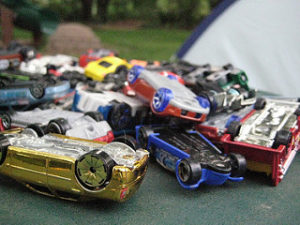
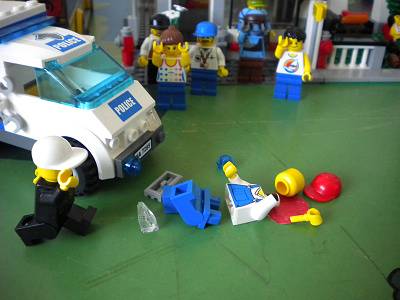
Crash!Today I’d like to highlight a particularly interesting and unhelpful form of language that affects how we think about car crashes — a major cause of mortality in Canada, and an area ripe for health promotion and injury prevention work.

Let’s look at the following reports from a variety of news outlets. I’ve chosen these fairly randomly — they are very typical examples:

1. “The investigation revealed that the car had been travelling west on Hillsview Rd. when it entered the north ditch and rolled onto its’ [sic] roof.”

2. “Police say that a white Toyota was driving southbound on Markham Rd. and was hit by a red northbound Toyota as the latter made a left-hand turn onto Elson St. The white vehicle ricocheted onto the sidewalk, striking the pedestrians.”

3. “Toronto police say a man is dead after his car plunged into a pit at a west-end construction site this morning. Police say the car went through the fence surrounding the site (on Joe Shuster Way near King and Dufferin streets) and into the pit, which is roughly two storeys deep.”

4. “A rollover claimed the life of a woman in her 20s as she walked her dog on Thornhill Woods Drive in Vaughan. After striking the woman, the vehicle continued off the roadway, struck several trees, drove over a hydro box and then came to rest after flipping several times.”

The big question for me when I look at these reports: where are the drivers? Why are all these cars behaving so very badly, all on their own? There’s a passivity and lack of agency in the language here that I think is very problematic. If it’s the cars themselves that are causing all these crashes, then in our minds the drivers are just along for the ride. And when pedestrians fail to leap out of the way of errant automobiles, it must somehow be the pedestrian’s fault.

In New York, the police have begun to change their minds on this issue. While they used to feel “There’s no criminality. … That’s why they call it an accident,” they’re now changing their policy to refer to “collisions’ instead of “accidents”. Indeed a “collision” sounds much less passive than an “accident”. But if we are going to make a serious attempt at reducing crashes, I think we need to put the responsibility for the crash firmly back where it belongs — in the vast majority of cases, on the driver — and so we should start describing crashes differently.

In the early 20th century when cars were a new invention, crashes were described more accurately. Sarah Goodyear wrote an excellent summary of this in her piece “The Invention of Jaywalking“. Drivers whose cars killed other drivers, passengers or pedestrians were charged with “technical manslaughter” or a similar quite serious charge. These days you’re more likely to get an inexpensive ticket and perhaps a couple of demerit points.

The news article that really brought this issue to the fore for me was this one:

An accident on Lake Shore Blvd. W. on Wednesday afternoon that left 10 people injured and downtown traffic snarled past rush hour is a tragic reminder of the importance of road awareness. Two vehicles smashed into each other and then into a group of people and a lamp post at the intersection at about 1:20 p.m. …  On Lake Shore, “you’re very much part of the intersection,” [Const. Hugh] Smith said, and it’s crucial for people to be watching traffic at all times in case they need to act quickly to protect themselves.”

To be clear, six pedestrians were standing — quite legally — on the sidewalk at an intersection. The driver of one car made an illegal maneuver at high speed, thus crashing his/her (the driver’s name is not even mentioned) car into another car, thus causing both cars to career at high speed up over the sidewalk and into the six pedestrians. And it’s somehow the pedestrians’ fault for having insufficient “road awareness” and not being able to “act quickly to protect themselves”? (The poor lamp post; I suppose it was at fault for not moving also.)

This is not a helpful way of thinking.

Let’s rewrite the examples above to reflect agency more accurately:

1. “The investigation revealed that the car had been travelling west on Hillsview Rd. when it entered the north ditch and rolled onto its’ [sic] roof.”

While travelling west on Hillsview Rd, Mr/Ms So-and-so drove his/her car into the north ditch and rolled it onto its roof.

2. “Police say that a white Toyota was driving southbound on Markham Rd. and was hit by a red northbound Toyota as the latter made a left-hand turn onto Elson St. The white vehicle ricocheted onto the sidewalk, striking the pedestrians.”

Mr/Ms So-and-so, driving a red Toyota northbound on Markham Rd., turned left into Mr/Ms OtherPerson’s southbound white Toyota at Elson Ave., ricocheting the white car into a group of pedestrians on the sidewalk.

3. “Toronto police say a man is dead after his car plunged into a pit at a west-end construction site this morning. Police say the car went through the fence surrounding the site (on Joe Shuster Way near King and Dufferin streets) and into the pit, which is roughly two storeys deep.”

Toronto police say a man is dead after he drove his car through a fence surrounding a construction site (on Joe Shuster Way near King and Dufferin streets) and down into a two-storey-deep construction pit.

4. “A rollover claimed the life of a woman in her 20s as she walked her dog on Thornhill Woods Drive in Vaughan. After striking the woman, the vehicle continued off the roadway, struck several trees, drove over a hydro box and then came to rest after flipping several times.”

An elderly driver struck and killed a woman in her 20s as she walked her dog on Thornhill Woods Drive in Vaughan. After striking the woman, Mr./Ms. So-and-so continued off the roadway, struck several trees, drove over a hydro box and then flipped the car several times.

I’ve made a conscious habit of mentally rephrasing crash reports in this way — and virtually all of them need it. Keep an eye out and try it yourself!

I think changing the language around this is an important injury prevention measure. We can’t effectively work on preventing, changing or mitigating an issue until we can talk about it in a clear way, and in a way that puts the responsibility for the problem in the right place.
Crash!

Comments closed

In the News – February 2012

Original link

This is the first in a series of posts highlighting what’s been in the news on various topics of interest to HC Link and anyone interested in Healthy Communities Fund priorities. I may not cover all priorities in each post — it will vary depending on what’s in the news.

Substance and Alcohol Misuse

The big story of the past while has been Ontario’s decision to de-list OxyContin, a prescription painkiller, from the drug benefit program because it is commonly abused. OxyContin’s new replacement, OxyNEO, designed to be harder to abuse (it resists crushing and so on) was also delisted. Several other provinces have followed suit.

The theory is that this will make it harder for people to acquire the drug, as presumably fewer pills will be prescribed and therefore in circulation. However, high addiction levels in some populations have some people worried about mass withdrawal or whether those populations will simply turn to alternative, potentially even more dangerous drugs.

Sample news stories:

Other substance- and alcohol-related health promotion news:

Mental Health / Mental Health Promotion

Some initial studies suggest ketamine might work very quickly on some people’s depression:

Other mental health / mental health promotion stories of interest:

Injury Prevention

Aside from the usual raft of warnings and food/toy recalls this month, there’s been increasing attention paid to concussions:

Other injury prevention stories:

And my favourite thought-provoking piece this month:

Healthy eating

No major stories recently, but here are a few interesting bits:

Physical activity, sports and recreation

Winter doesn’t seem to be a prime time for stories in this area. Still, some items of interest:

And last, some light amusement:

A.J. Jacobs: How healthy living nearly killed me

“For a full year, A.J. Jacobs followed every piece of health advice he could — from applying sunscreen by the shot glass to wearing a bicycle helmet while shopping. Onstage at TEDMED, he shares the surprising things he learned.”

Comments closed